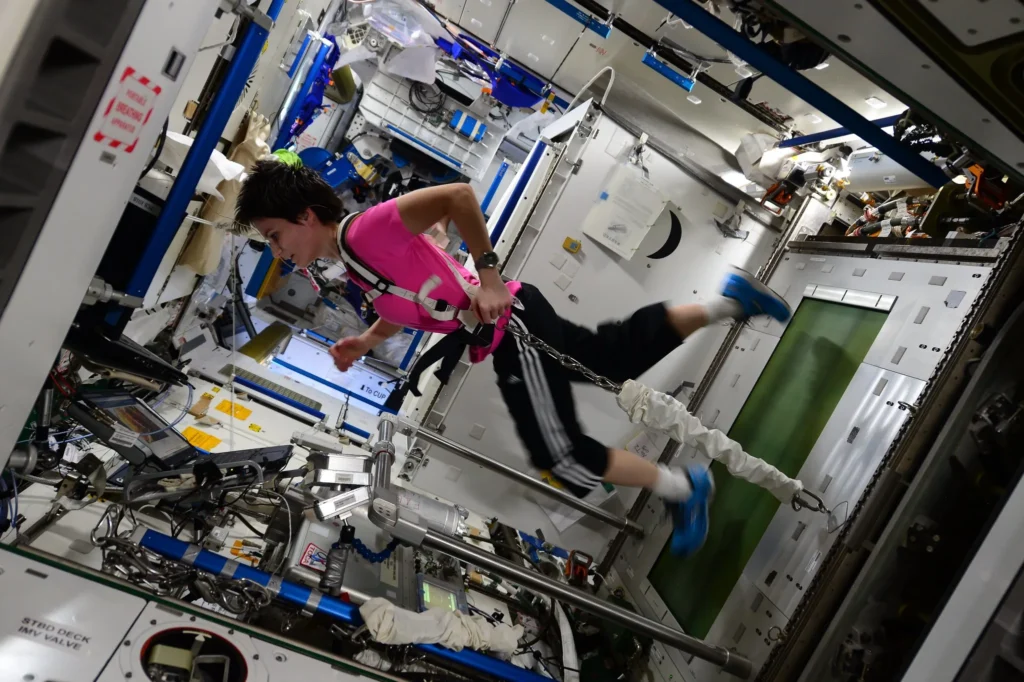
NASA’s space exercise technologies, originally designed to combat muscle and bone loss in microgravity, are transforming Earth-based fitness by adapting high-efficiency tools for gyms and preventive health. These innovations help prevent age-related decline through targeted resistance, vibration, and low-impact training.
Space Tech Origins
Astronauts on the International Space Station lose up to 20% of muscle mass and 1-2% of bone density monthly without countermeasures, prompting NASA to develop compact, versatile devices. The Advanced Resistive Exercise Device (ARED) uses pneumatic pistons and springs for up to 600 pounds of force, simulating squats, deadlifts, and calf raises in zero gravity. This tech targets major muscle groups efficiently, a model now licensed for Earth use in physical therapy and athletic training.
Key Adaptations for Gyms
Vibration platforms, inspired by NASA’s research into muscle activation under altered gravity, deliver whole-body vibration (WBV) to enhance recovery and circulation. Gym versions pulse at 20-50 Hz, boosting blood flow by 30% post-workout and reducing delayed-onset muscle soreness. Antigravity treadmills, stemming from space treadmill tech like the T2 model, use air pressure to offload up to 80% of body weight, enabling injury-free running for rehab patients and those with arthritis.
Muscle Recovery Benefits
NASA’s elastic resistance systems, evolved into tools like the Bowflex Revolution, provide variable tension mimicking free weights without joint stress. Studies show these increase muscle protein synthesis faster than traditional methods, aiding post-exercise repair. In gyms, paired with ARED-inspired machines, they cut recovery time by supporting high-rep, low-impact sessions that maintain strength in seniors.
Preventing Age-Related Decline
As people age, sarcopenia reduces muscle mass by 3-5% per decade after 30, accelerating frailty. Space-derived tech counters this: WBV platforms improve bone density by 1-2% in trials, similar to NASA’s anti-osteoporosis protocols. Resistive devices like ARED adaptations enhance endurance, with users over 60 gaining 10-15% leg strength in 12 weeks, per analog mission data. Antigravity systems promote mobility, lowering fall risk through gradual load progression.
Cutting-Edge Innovations
Rice University’s 2025 adaptive harness, NASA-funded, integrates sensors for real-time feedback on load and comfort during space workouts. Earth gym prototypes monitor performance, personalizing routines to prevent overuse. Combined with VR-enhanced treadmills from Glenn Research Center, these create immersive sessions that boost adherence by 40%.
Practical Gym Integration
Start with 10-15 minute WBV sessions post-lift: stand on the platform at 30 Hz for squats to amplify muscle engagement. Use ARED-style machines for 2-3 sets of full-body compounds, logging data via apps for progress tracking. For seniors, antigravity walking at 40% body weight builds stamina safely, integrating into preventive wellness plans.
These NASA spin-offs make elite-level training accessible, merging science with everyday fitness to sustain vitality against aging..